


A Philadelphia Land Bank – Why We Need to Get it Right [DAGspace]

A Philadelphia Land Bank – Why We Need to Get it Right [pdf]
by John Kromer
There’s money to be made in Philadelphia’s vacant buildings and lots. As the city’s real estate market continues its slow recovery, more investors and developers are going to be attracted to vacant property in Philadelphia, for two reasons:
- After decades of depopulation, more people—more housing consumers—are moving into the city;
- And after decades of metropolitan-area sprawl, less real estate is available for development outside the city. Some suburban areas have nothing left to develop.
That’s why, even in the midst of the recession, vacant houses were being rehabilitated and vacant lots were being infilled with new residential construction in Southwest Center City, Lower North Philadelphia, Kensington, and Fishtown. As the recession fades, we’ll see more opportunities to transform former nuisance properties into valued assets. But without an asset-management strategy to guide vacant property transactions, the prospects for future success will be jeopardized.
Here’s why.
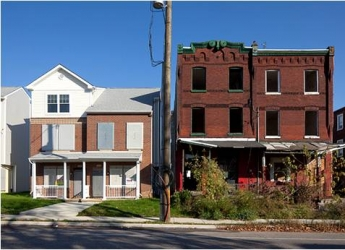
Not all vacant properties are alike. Some vacant buildings and lots are located in strong neighborhood real estate markets such as Northern Liberties, where the chances of attracting capable, profit-motivated developers are reasonably good. Other vacant properties are located in “changing” neighborhoods, such as Point Breeze, where opportunities for development are much more limited but may increase during the coming years. And others are located in weak real estate markets such as Tioga/Nicetown, where the cost of rehabilitating a vacant building or constructing a townhouse on a vacant lot substantially exceeds the market value of the finished product. We need to decide which properties to return to the real estate market with few or no restrictions (other than compliance with codes), which ones to offer with conditions attached in order to support equitable development in changing neighborhoods, and which ones to hold off the market until conditions improve.
Not all investors and developers are alike either. The best ones seek neighborhood approval for their development proposals, comply with city standards, and produce high-quality products that enhance their surroundings. But other investors and developers acquire and hang on to deteriorated properties, skirt city code requirements, and contribute to neighborhood blight. We need to do more to encourage responsible developers while defending our communities against predatory speculators.
Enabling legislation currently under consideration in Harrisburg (where HB 1682 has been approved by the House and is expected to pass the Senate and be signed by the Governor) will help Philadelphia and other municipalities organize an effective asset management strategy for vacant property. To begin with, the legislation would make it easier to achieve a key Nutter Administration goal: establishing a clearinghouse—a “land bank authority”–that would market and efficiently convey publicly-owned properties to designated recipients. The enabling legislation would also make it easier for a land bank authority to acquire tax delinquent properties that would otherwise be auctioned at Sheriff Sale, with little or no consideration of winning bidders’ credentials or plans.
Senior members of the Nutter Administration have participated in many discussions about the drafting of the state land bank legislation and related implementation issues. Councilwoman María Quiñones-Sánchez has proposed a city ordinance (Bill No. 12005200) to create a land bank authority in Philadelphia.
Questions and concerns are being raised as well, and they’ll need to be addressed. Here are some of the biggest ones, along with suggestions about how to resolve them.
Why do we need another public agency? We don’t—the land bank authority could be an existing agency such as the Philadelphia Redevelopment Authority (PRA), which already employs professional staff with expertise in real estate and development financing transactions.
What’s to stop the land bank authority from giving preference to politically-connected developers? A land bank authority—like a Redevelopment Authority, a Zoning Board, or a City Planning Commission—is only as good as its leadership. When the board and managers of an authority or department report to the Mayor, when the Mayor enforces a strong code of ethics, and when information about the transacting of city business is made publicly available, the likelihood of favoritism and corruption is substantially reduced. Under the Nutter Administration, some Redevelopment Authority actions have generated controversy over city policies; but the city has no counterpart to the scandalous insider dealings associated the Commonwealth’s mishandling of the Family Court building project. It’s up to us to make sure that future city administrations maintain the high standards currently in place.
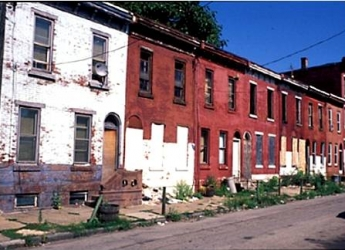
What’s the point of withholding properties from the real estate market in some neighborhoods? Why not let the market decide which properties get acquired and developed? Philadelphia has some good opportunities to leverage investment in weaker real estate markets through strategic property acquisition and conveyance. One example: Redevelopment Authority acquisition and consolidation of 111 individual parcels—primarily vacant houses and lots, sheds, and garages–enabled Asociación Puertorriqueños en Marcha (Association of Puerto Ricans on the March, or APM), one of the city’s top-performing community development corporations, to leverage private equity to finance the development of a highly successful supermarket at Sixth and Berks Streets. With routine disclosure of information about strategic acquisitions such as this one, the public can learn what properties are being “land banked” and why.
Won’t Philadelphia’s tradition of “Councilmanic prerogative” over property conveyances interfere with land bank authority transactions? City Council’s long-standing practice of deferring to the wishes of the district Councilperson when voting on the sale or transfer of any city-owned property in that person’s district means that if the local Councilperson supports the transaction the deal is approved; otherwise, it dies. This tradition is not a law or City Charter requirement.
Some benefits come from this arrangement. District Council members are elected by the voters who will be most affected by property transactions, and the views of a district Council member should be respected and given some priority consideration. But this has to be done without compromising the land bank policy. Here’s how to do that: require district Councilperson approval for all properties proposed for entry into the land bank—including publicly-owned properties as well as privately-owned tax-delinquent properties or other proposed acquisitions. In exchange for the Councilperson’s approval, the land bank authority would reaffirm that the properties entering the land bank would be conveyed in a manner consistent with zoning and land use policies, as well as with city and neighborhood plans associated with the area in which the property is located. Subject to the above, the district Councilperson would not block the conveyance of the property to a developer designated by the land bank.
In this way, a district Councilperson could withhold from the land bank any property for which he or she wanted city support for a particular developer or development option. The possession of this power—which a district Councilperson already has—would not amount to giving Council control over the land bank authority. In these circumstances, it would just require the Councilperson and city to reach agreement on how to deal with the property in question.
City Council districts are very large geographic areas, and it’s likely that most district Councilpersons and their constituents would not have strong opinions about who should get many of the small vacant properties scattered across a typical district—many of them only suitable for side yards and parking spaces–as long as the transaction process was conducted openly and reliably.
A district Councilperson who chose not to support land bank acquisition of properties within his or her district would not receive any of the benefits associated with the land bank. In time, such a Councilperson might be persuaded by constituents to start making use of the land bank in order to take advantage of development and improvement opportunities being pursued in other districts.
Once the state enabling legislation is approved, mustering the political support needed to create a land bank in Philadelphia will be a challenge—but it will be a challenge that’s worth a commitment of our energy and influence. In the interest of our future economic prospects and the future well-being of our communities, we need to make sure that Philadelphia does it right.
———
John Kromer is the author of Fixing Broken Cities: The Implementation of Urban Development Strategies (New York: Routledge, 2010) and Money, Mojo, and Votes: Election Reform and Political Reality in Philadelphia (with Julie M. Proulx and Andy Denison; Amazon e-book, 2012). In 2011 he ran for the office of Philadelphia Sheriff, promising, if elected, to work with the city and the courts to dismantle the Sheriff’s Office and reassign its responsibilities to other units of government.

DAGspace is a monthly opinion column written by members of the Design Advocacy Group (DAG), with the goal of promoting good design by encouraging thoughtful public discussion of design matters. The mission of the Design Advocacy Group is to provide an independent and informed public voice for design quality in the architecture and physical planning of the Philadelphia region.
The next DAG meeting is this Thursdsay, April 5 at 8am, at the Center for Architecture (1218 Arch Street), featuring a panel discussion about City Council’s land bank proposals and the administration’s Front Door policy, allowing time for group discussion. Panelists will be Jennifer Kates, Legislative Assistant to Councilwoman Maria Quinones-Sanchez; John Carpenter, Deputy Executive Director, Neighborhood Stabilization Program and Land Policy, Philadelphia Redevelopment Authority; and Jeff Allegretti, President of Innova, housing development services.
In addition to appearing on DAG’s website, you’ll be able to read DAGspace on Eyes on the Street. You can read previous DAGSpace articles here.
WHYY is your source for fact-based, in-depth journalism and information. As a nonprofit organization, we rely on financial support from readers like you. Please give today.
Brought to you by PlanPhilly

PlanPhilly
In-depth, original reporting on housing, transportation, and development.
Part of the series

Eyes on the Street
Eyes on the Street brings new ideas and fresh voices into the conversation about Philadelphia’s changing cityscape.

Philly’s Equal Justice Center: More delays, less public space
A social impact development project planned for Philadelphia’s Chinatown is moving forward with a new design and timeline.
4 years ago

Philadelphia halts most public land sales, pending reforms
The Philadelphia Redevelopment Authority has put the brakes on a large portion of public land sales.
5 years ago