Situation Vacant: Growing vegetables and opportunity amid blight
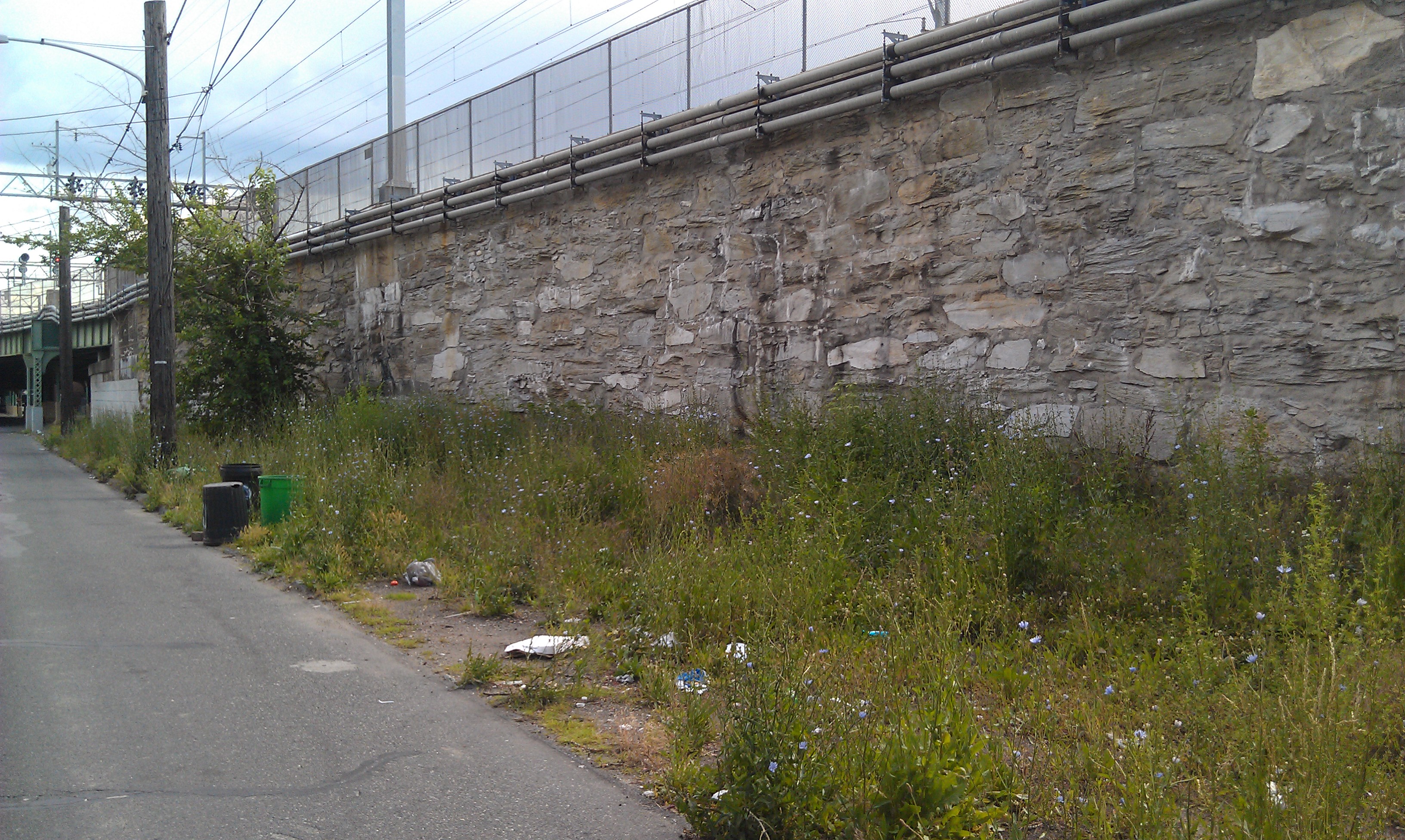
In advance of PlanPhilly’s panel discussion about the city’s vacant land strategies on June 12th, Eyes on the Street is collecting and sharing stories from Community Contributors about vacant property. Doris Berris, a resident of the 1500 Block of North 9th Street, shares this piece about her neighborhood’s effort to transform several vacant lots along the SEPTA tracks running up North 9th. In 2008 Berris and her neighbors built a community garden to grow vegetables, teach kids about fresh food, and build community along the way. The gardens, grown on lots owned by a combination of city agencies, were razed in 2009 and look as forlorn as before. But what if the city could empower communities with tools to reclaim vacant properties in their midst and transform abandonment into assets?
In 2008, myself and several friends in the neighborhood were having a conversation about the way our children think about food, and about how they would look at corn on the cob for the first time and be confused because they always thought corn came from a can. Because so many of us are from the south where people truly have a relationship with the land, we decided right then and there that the children in our neighborhood needed to learn where food actually comes from.
The row of vacant lots across the street from my house gave us a great opportunity to do this. The whole west side of the 1500 block of North 9th Street sits vacant, and our neighborhood agreed that we needed to establish a community garden so we could grow our own fresh food and teach our children how food is grown. Before we did any gardening, I contacted the city and was told that there was no plan for the land, which is owned by a number of different city agencies, and that we were free to start our garden.
Working with the local Mennonite Church, we were able to acquire seeds and soil to grow bell peppers, spinach, onions, beets, turnips and all kinds of other vegetables. Almost everyone on the block pitched in, and eventually the garden began to really flourish. It became a destination in the local community, and many people would come by and say they were inspired to start gardens on their own block.
The garden also became an afterschool destination for children, who learned for the first time what real chores were about. We would take the children on trips to South Philly to get hay and other materials for the garden, and the whole experience really brought us together as a community.
Then one day, I woke up to the feeling of my house shaking. It felt like it was literally falling apart. When I flew to the door to see what was going on, I could immediately see beautiful big white squash being thrown on top of a big pile of food that had already been ripped up by large trucks sent by the city.
We had received no warning or notice from the city whatsoever. When I finally found somebody who would talk to me, he said they had gotten orders to clear the lot for “maintenance.” He said they had no knowledge of the garden because I had spoken to another city agency that owns just one of the lots. Now, the lots look the way they did before our beautiful garden, blighted and ugly. The city hasn’t done any “maintenance” on the land since that day.
What this story says to me is that residents need to have more control over vacant land in their communities. All around the city, people have great ideas about how to use land for gardens, affordable housing, parks and other vital community needs. If done right, the land bank bill currently before City Council has the potential not only to streamline the process so you don’t get different answers from different agencies, but to also empower communities by requiring a specific percentage of land be given to individuals and community groups that will use it for real community benefit.
———
Doris Berris is a member of Temple Presbyterian Church in North Philadelphia, which is part of the Campaign to Take Back Vacant Land.
Eyes on the Street is collecting stories about the effects of vacancy on neighborhood quality of life and community development in Philadelphia. If you want to share your story, send it our way.
WHYY is your source for fact-based, in-depth journalism and information. As a nonprofit organization, we rely on financial support from readers like you. Please give today.
Brought to you by PlanPhilly

PlanPhilly
In-depth, original reporting on housing, transportation, and development.
Part of the series

Eyes on the Street
Eyes on the Street brings new ideas and fresh voices into the conversation about Philadelphia’s changing cityscape.